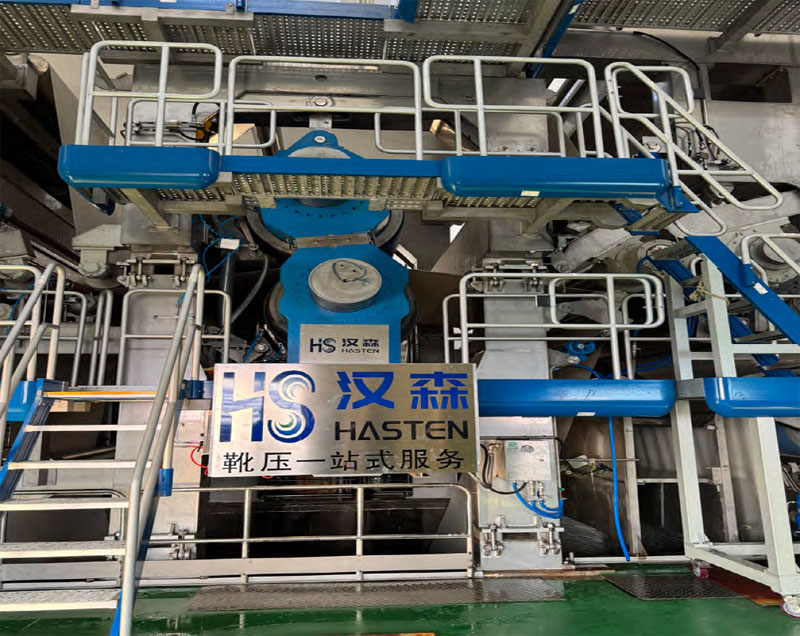
1. The dehydration efficiency is extremely high
● Pressing dryness: 50% to 55% + (traditional 40% to 45%).
● The dehydration rate has increased by approximately 5%+, resulting in a significant reduction in drying load.
2. Moderate pressure, not easily crush
● High linear pressure (up to 2000kN/m) and low specific pressure.
● The pressure distribution is uniform, making the paper sheet less prone to embossing and crushing.
● Suitable for high-weight, thick paperboard, and multi-layer paperboard.
3. Improvement of finished paper quality
● Fiber bonding is more thorough: higher ring crush, burst, and tensile strength.
● Better bulkiness, smoother paper surface, and lighter blanket imprint.
● The moisture and basis weight are more evenly distributed across the entire width.
4. Energy-saving and production capacity advant
● For every 1% increase in dryness, the wet strength increases by approximately 7%, and the breakage rate decreases.
● Dry steam consumption ↓ by approximately 8%.
● It can either increase the vehicle speed or reduce the number of drying cylinders in the drying section.
● Power consumption in the pressing section ↓ by approximately 13%.
5. More stable operation
● The wide pressure zone has strong adaptability to quantitative/moisture fluctuations.
● High wet strength and low risk of paper breakage in the drying section.
● Suitable for high-speed paper machines (with speeds up to 2000m/min).
|